
Choosing Exposed Aggregate Colours & Stone Mixes
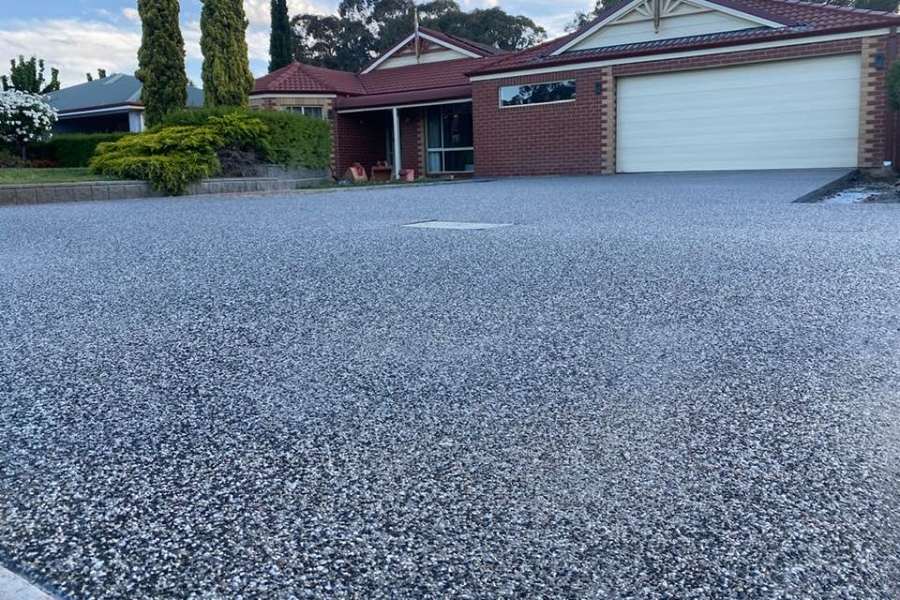
Exposed aggregate colours run from crisp whites and cool charcoals through to warm honey, gold and softer river-pebble tones — and the right one for your place depends on the house it sits in front of, where it’s going in, and how you want it to weather over time. It’s one of the most popular decorative finishes for exposed aggregate concrete driveways in Bendigo, alfrescos and pool surrounds precisely because there’s so much to choose from — but that’s also what makes it easy to get wrong.
This is a plain-English guide to how the colour actually works, the mixes people are picking around Central Victoria right now, and how to choose one you won’t be second-guessing every time you pull into the driveway.
By Leigh Whyte Concreting
Published August 2026
Reading time 9 min
What Gives Exposed Aggregate Its Colour
The colour is the stone. Exposed aggregate arrives on site already mixed through the concrete — the stone isn’t sprinkled on top after the pour. It’s batched evenly at the plant and placed evenly by the crew, so when the top layer of cement paste is washed back, the stone underneath comes up consistent across the whole slab.
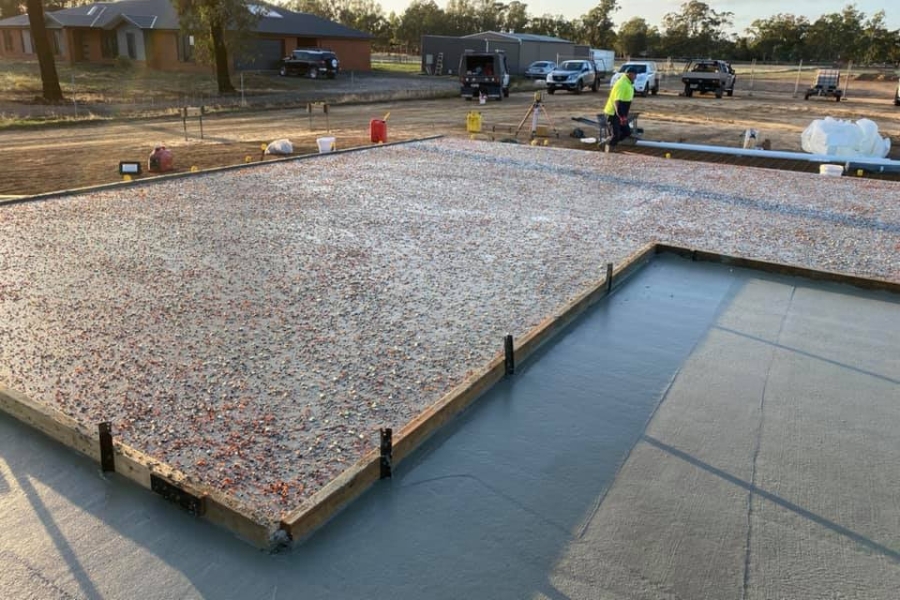
That wash-back is where the finish lives or dies. A fine mist of retarder goes on once the slab is trowelled, which slows the cement setting on the very top so it can be pressure-washed off later. Wash too early and you tear the finish up; wait too long and the stone stays buried under a cement film.
It's all timing. You can go too far and then it starts washing stones out — which you don't want.
— Leigh Whyte
Twenty-three years of pouring the stuff is largely twenty-three years of reading that timing — weather, slab temperature, how hard the concrete’s going off underfoot — which is what stops the finish coming up patchy on one end of the driveway and buried on the other. On a sloping block it takes even more care: the retarder has to go on in finer coats so it doesn’t run downhill and stripe the finished surface.
Two things worth knowing before you look at a sample board: wet concrete always reads darker than dry, and a sealer deepens the stone slightly and gives a modest sheen. So the small square you’re picking from at the supplier’s yard will usually look a little lighter and flatter than your finished, sealed driveway.
Popular Exposed Aggregate Colours & Stone Mixes
Most residential exposed aggregate colours fall into three broad families: warm tones, cool and neutral tones, and mixed or feature blends. There isn’t one “right” family — the job of choosing is matching the family to the house.
Around Bendigo, most colour choice starts at the concrete supplier’s sample yard. The two suppliers Leigh most often recommends are Boral and Hymix — both carry the ranges most homes choose from and both are strong on consistency. Mawsons and ASQ Premix Concrete carry additional mixes at a slightly higher price if you want a wider palette. Whichever supplier you land on, the sample board is where you shortlist — then we bring the top two or three to site to compare against the actual house.

Warm Tones: Browns, Golds and Reds
Warm mixes lean into browns, honey golds, tan and softer red tones. They tend to suit heritage housing, red-brick homes and traditional Central Victorian streetscapes, because they sit alongside the brick and roof colour rather than fighting it. A honey-toned mix in front of a red or brown-brick home reads as one continuous look; a stark charcoal in the same spot can look like it belongs to a different house.
If you’re weighing warm against something cooler, our comparison of honed concrete versus exposed aggregate is a good read on how each finish carries a colour differently.
Cool and Neutral Tones: Greys, Charcoals and Whites
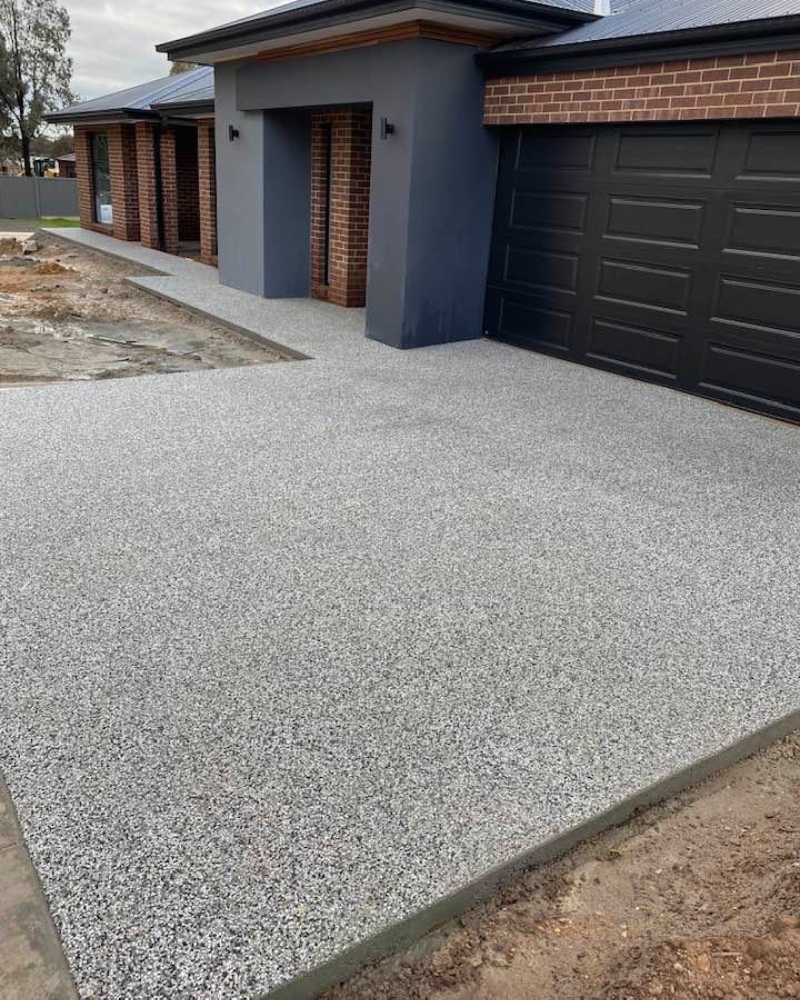
Greys and charcoals are the workhorse of modern builds — they sit cleanly against rendered facades, dark window frames and Colorbond roofs. Darker mixes hide the odd tyre mark and general grime better than lighter ones, which is worth knowing on a driveway that gets used every day.
Whites and very light mixes look sharp on day one but ask more of you over the long haul: they show oil, tyre marks and dust more readily, and around a pool or alfresco (where the wear is lighter than a driveway) they hold up better than on the front of the house.
Predominantly, a lot of mixes that go with anything is your black and whites. Once you start getting into different coloured stones, you've really got to think about what's going to happen around it.
— Leigh Whyte
Mixed and Feature Blends
Feature blends pull in more than one stone type — a base stone with a contrasting or metallic fleck, or a genuine feature product like a decorative glass aggregate. One of the more interesting jobs we’ve done was a Huntly pool surround with a glow aggregate from Schnepp Recycled Crushed Glass mixed through — light enough to float to the surface during the wash-back, sun-charged during the day, and, according to the current owner (a retired concreter who happened to buy the house), still glowing three years later.


A Schnepp glow-aggregate pool surround in Huntly — mint-green fragments in daylight, a scatter of stars after sunset.
Feature blends aren’t for every job, but they’re worth knowing exist.
How to Choose a Colour That Suits Your Home
Start with what’s already there and can’t be changed cheaply: the roof colour, the brick or render, the window frames, and any existing paving. Those are the anchors — the exposed aggregate should sit against them, not compete with them. A few practical things people often forget until it’s too late:
Where it's going in matters as much as what colour it is.
Driveways, alfresco and pool surrounds are the areas worth spending on. Long side paths, the strip past the hot water service, the bit behind the garage — a decorative finish there is money that doesn't earn its keep. As Leigh puts it: "Beautify the areas that you see, to jazz up the front of the house or the back of the house."
Think about what's coming later.
If the driveway goes in this year and the alfresco follows next year, pick a stone family you can carry through, not a one-off you'll regret when it's time to match.
Different mixes can work in different parts of one property — if it's planned.
A warmer tone at the front to match the brick, a cooler grey around the pool at the back to match a modern rear elevation: two different mixes, one considered palette. It only looks intentional when someone maps it out up front.
The seal changes the look a bit.
A sealer deepens the stone slightly and gives a subtle sheen; how much depends on the product. Our guide to sealing an exposed aggregate driveway walks through matte versus gloss and what re-sealing looks like a few years down the track.
Sun and weathering play a small part too.
UV doesn't change the stone materially — stone is very stable — but the cement matrix around it lightly weathers, and shaded south-facing surfaces will accumulate a different pattern of grime and moss over years than full-sun sections. Both wash off; neither is a reason to pick against a mix.
If you’re not sure on any of the above, don’t worry about it. Bring what you have and we’ll work it out on site.

Andrew & Angela Ford's whole-of-property palette
Our Maiden Gully build for Andrew and Angela Ford is a case in point on multi-area planning: five separate stages — driveway, pathways, pool surround, alfresco and garden-bed mower strips — with plain concrete and exposed aggregate carried through cohesively across the whole property.
Leigh handled all preparation work and delivered a high-quality finish using a combination of plain concrete and exposed aggregate. Every stage was completed on time, at a very reasonable price, and the workmanship was outstanding.
— Andrew & Angela Ford, Maiden Gully
Andrew’s summary of how it got there is the same as Leigh’s: “It’s all a planning process. You’ve got to think about it and do it once, do it right.”
Seeing Samples Before You Commit

Most people choose exposed aggregate colours by visiting the concrete supplier’s yard and going through the sample board — small poured squares showing each mix in the flesh. That’s genuinely the best way to compare, because a photo on a website or a phone screen never quite matches what a stone looks like at the size and lighting of a real driveway. The suppliers know their range well and will tell you what’s trending in Central Victoria right now.
Once you’re between two or three you like, a site visit is worth having. Standing on the block with the samples in hand — next to the actual brick, roof and garden the finish has to live with — resolves the choice quickly. It also lets us talk through the wash-back options (a heavier or lighter exposure changes how prominent the stone reads), the sealing choice, and where the mix will sit best given the slope, drainage and sun on your particular site.
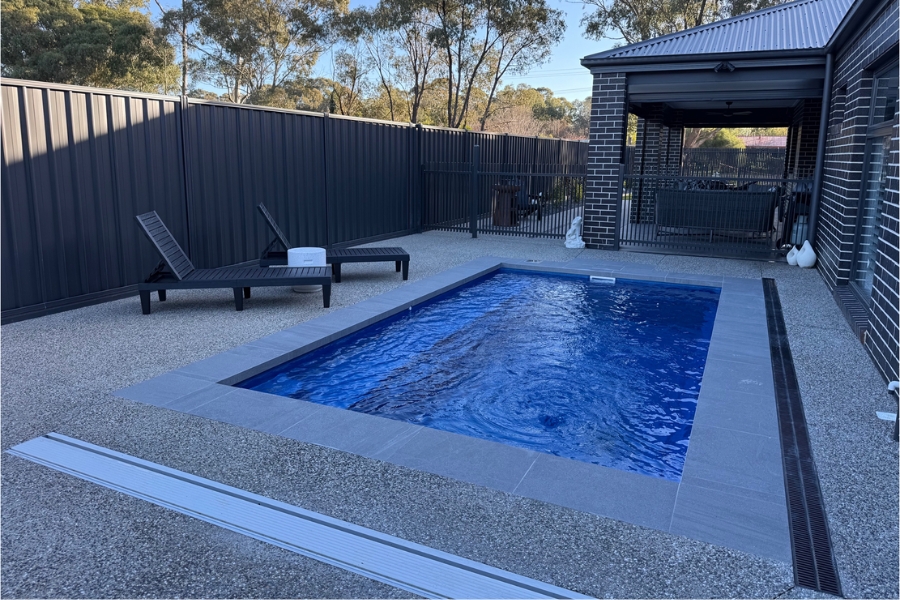
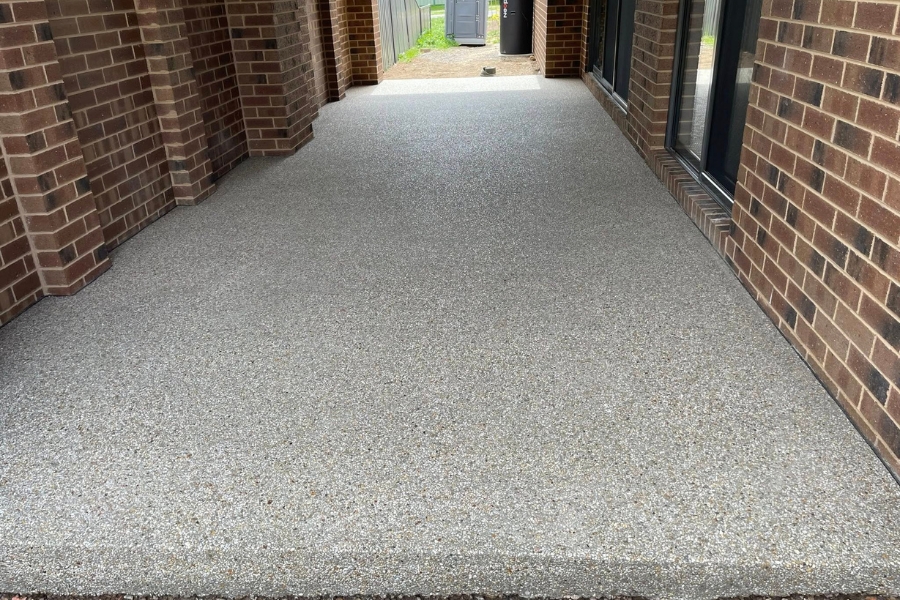
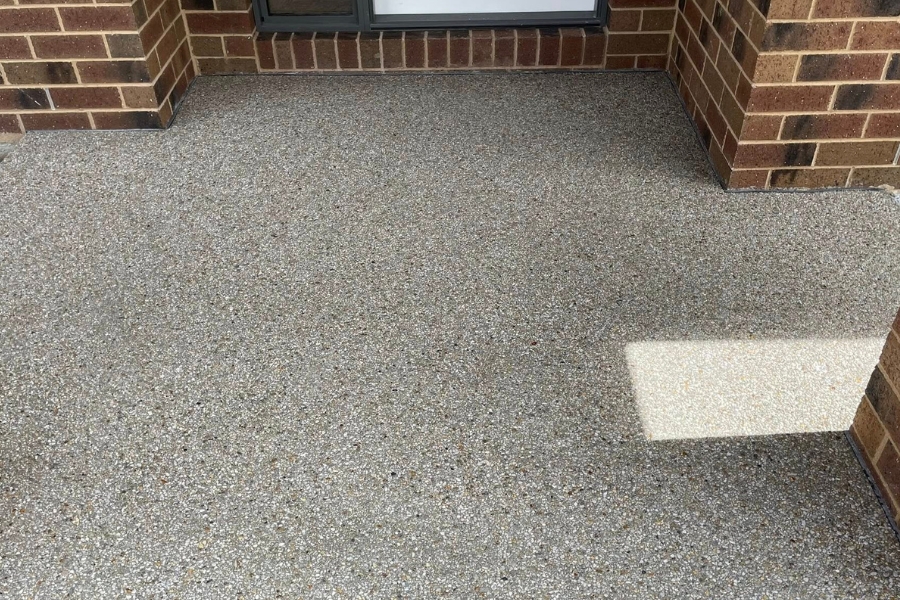
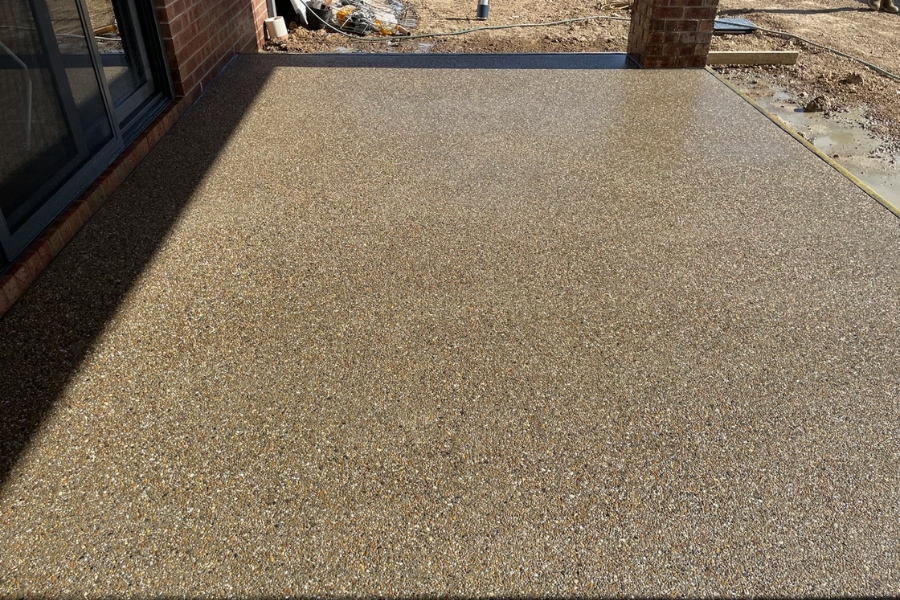
More Exposed Aggregate Colours & Stone Mixes
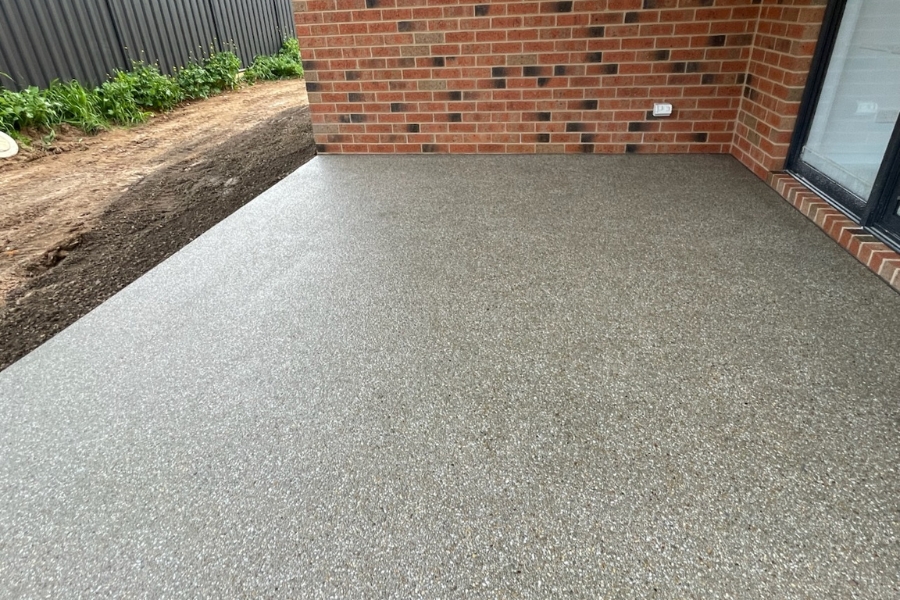
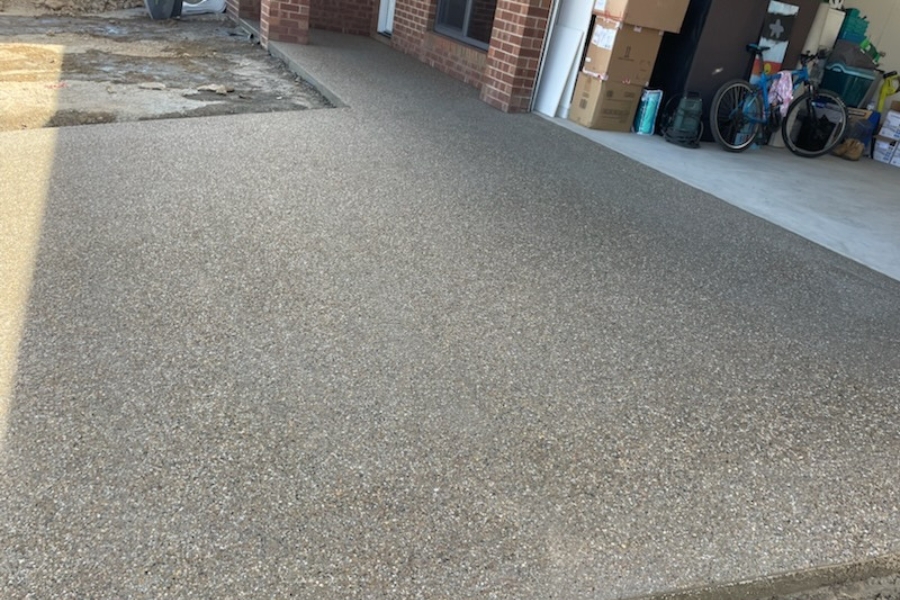
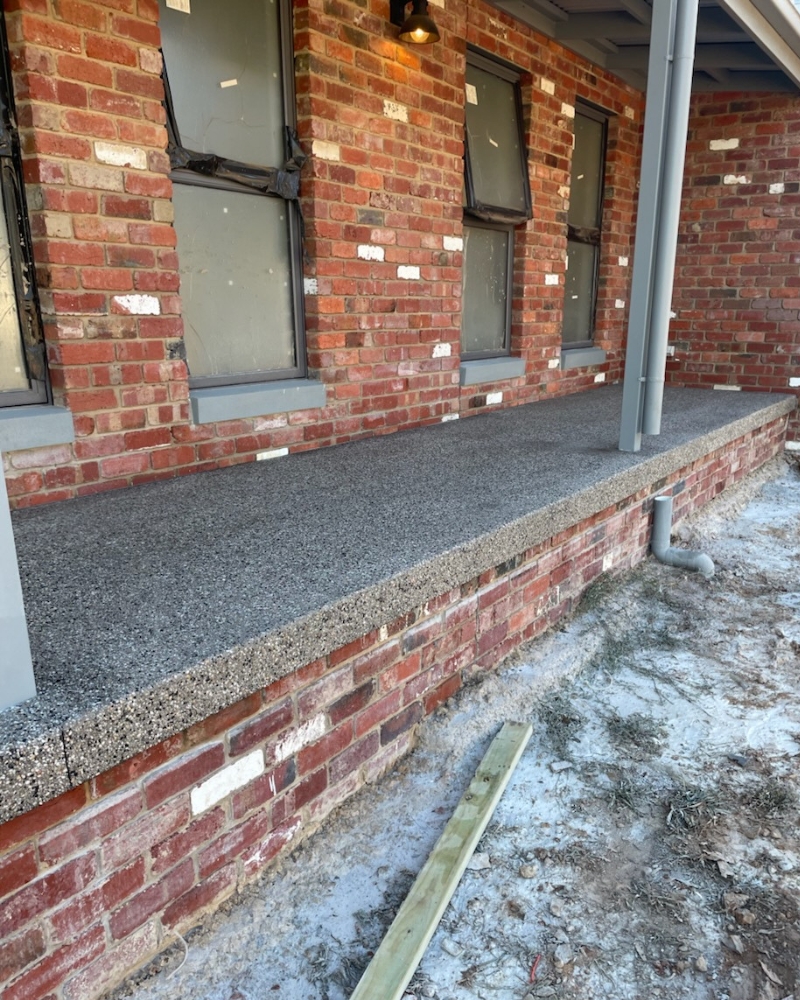
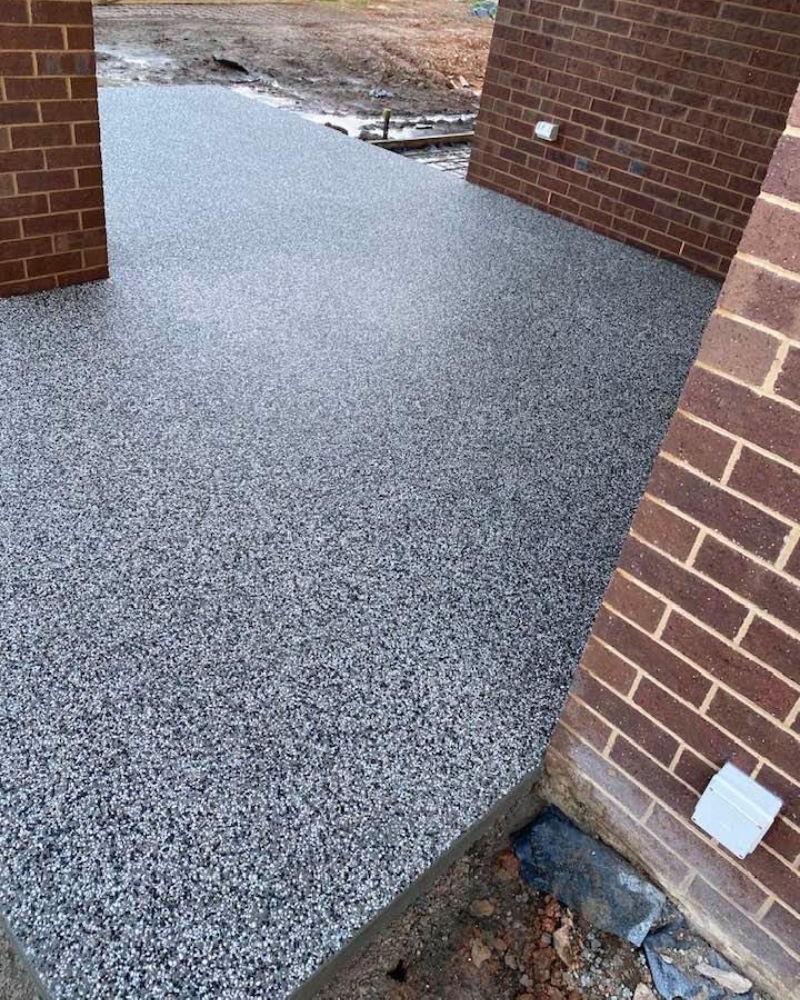
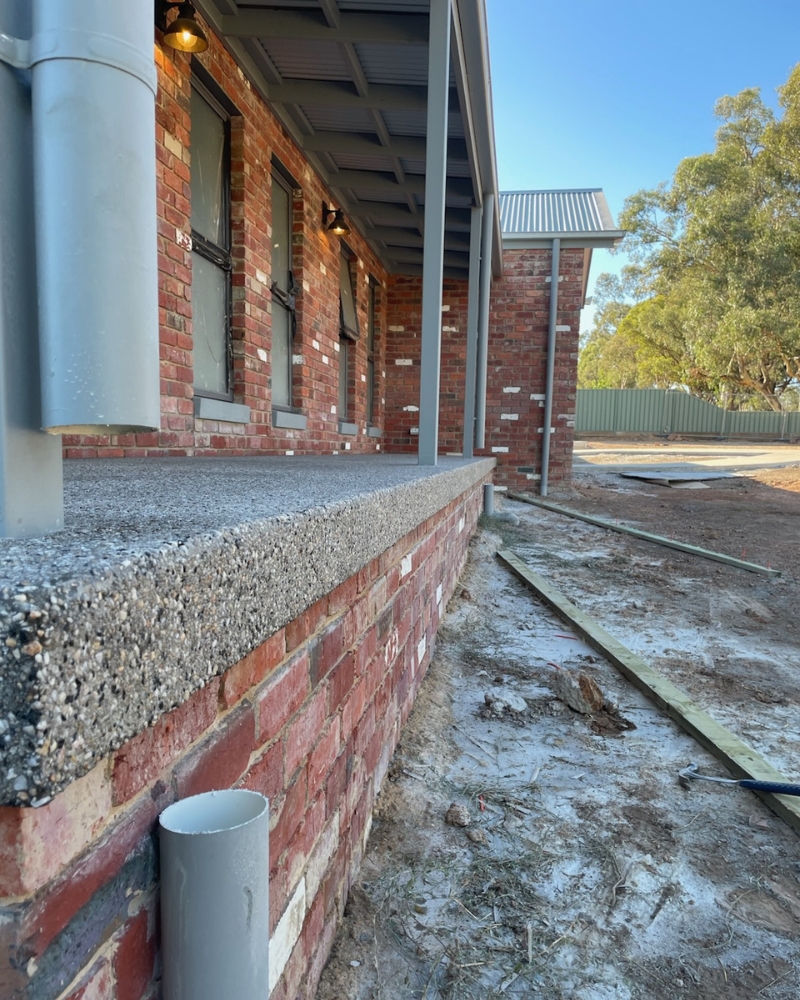
A closer look at the range we’ve poured around Central Victoria.





Questions About Exposed Aggregate Colours
If your question isn’t here, send it through and we’ll answer it on the phone.
What is exposed aggregate concrete?
Exposed aggregate concrete is decorative concrete where the top layer of cement paste is washed back to reveal the stone in the mix underneath. It’s the same structural slab as plain concrete — usually 32 MPa for driveways and surrounds — just with a textured, coloured finish instead of a smooth grey top.
What are the most popular exposed aggregate colours around Bendigo?
Cool greys and charcoals are the most common pick for modern builds; warm honey, gold and brown tones sit better in front of red-brick and heritage homes. Blacks and whites are the safest “goes with anything” choices; feature blends and coloured stones need more thought about the surrounds.
Can you use exposed aggregate around a pool or alfresco?
Yes — pool surrounds, alfrescos and entertaining areas are three of its most popular uses. The texture is grippy underfoot, and it’s easier on bare feet than a coarse broom finish. Sheds are the main place it’s not used: a shed slab needs a smooth trowel finish, not exposed stone.
Does exposed aggregate colour change once it's dry or sealed?
A bit, and again once it’s sealed. Wet concrete always reads darker than dry. A sealer typically deepens the stone colour slightly and gives a modest sheen, which is why we recommend seeing a finished, sealed job in the flesh — not just an unsealed sample square — before you commit to a mix. Over the years the finish weathers gently rather than shifting colour: the stone itself is very stable, and any dulling can usually be brought back with a clean and a fresh coat of sealer.
Do lighter exposed aggregate mixes stain more easily than darker ones?
Whites and very light mixes show marks more readily than darker ones — oil drips, tyre marks, general grime. A good seal helps a lot. On a driveway that sees daily traffic, it’s worth a specific conversation about upkeep before committing to a white or very pale mix; on an alfresco or pool surround it’s less of a concern.
Found A Colour You Love?
Book a free, no-obligation site inspection and we’ll bring options out to match your home — earthworks to exposed aggregate, one accountable operator. If you’re still working out the budget side, our guide to concrete driveway costs across Central Victoria is a good place to start.